
รัฐบาลทรัมป์อาจเข้าถือหุ้นใน OpenAI เพื่อให้คนอเมริกันได้ประโยชน์จาก AI Trump Administration May Take Equity Stake in OpenAI to Let Americans Benefit from AI
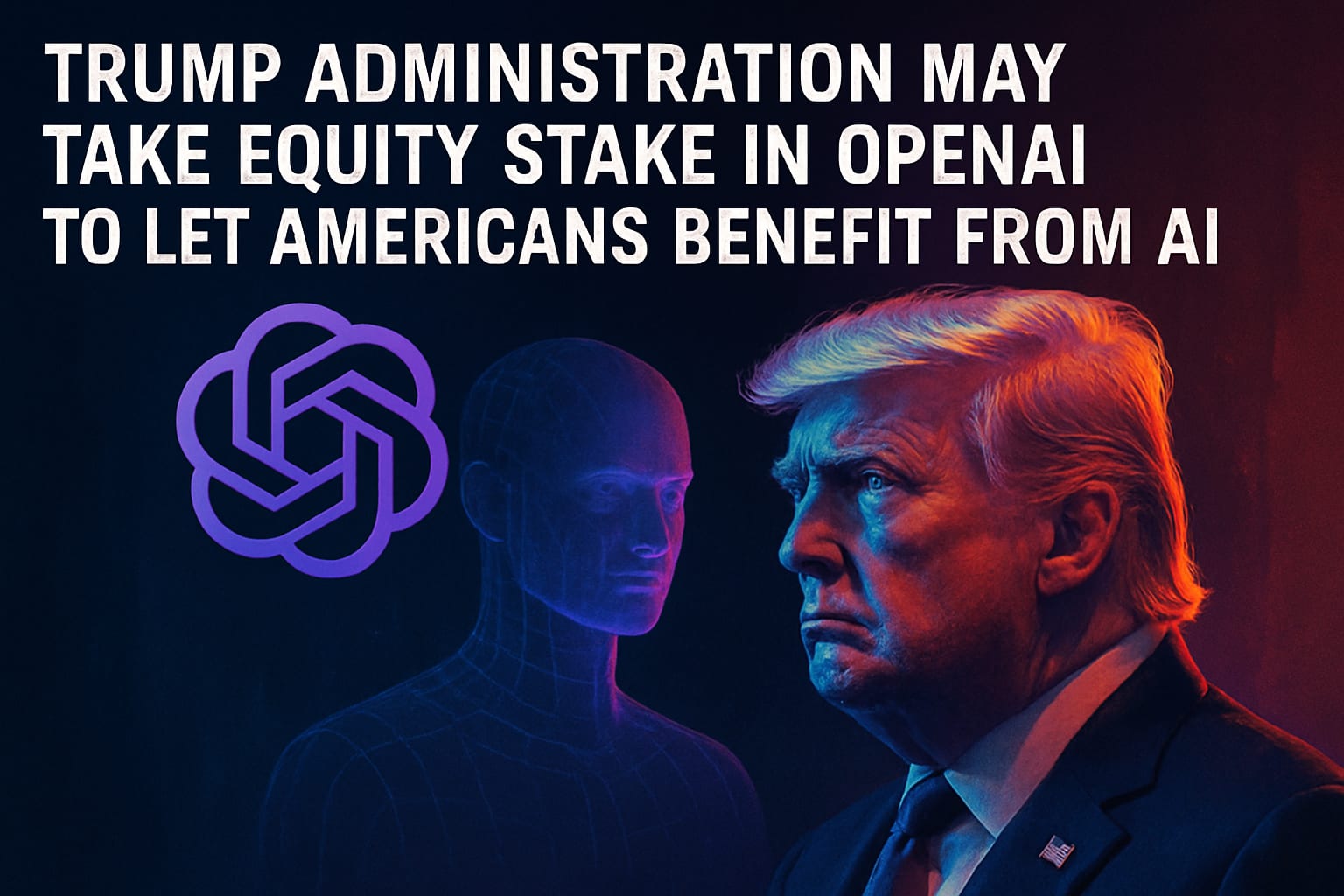
ประธานาธิบดีโดนัลด์ ทรัมป์ เปิดเผยว่ากำลังเจรจาข้อตกลงที่จะให้ประชาชนชาวอเมริกันได้รับผลประโยชน์จากความสำเร็จของ AI โดยอาจรวมถึงการเข้าถือหุ้นในบริษัท OpenAI
President Donald Trump revealed he is discussing deals that would let the American people benefit from AI's success, potentially including an equity stake in OpenAI.
รัฐบาลสหรัฐฯ อาจเข้าถือหุ้นใน OpenAI
ประธานาธิบดีโดนัลด์ ทรัมป์ ได้เปิดเผยว่ารัฐบาลของเขากำลังเจรจาข้อตกลงที่อาจทำให้รัฐบาลสหรัฐฯ เข้าถือหุ้นในบริษัท OpenAI ผู้พัฒนา ChatGPT โดยระบุว่าเป็นแนวทางที่จะ "ให้ประชาชนชาวอเมริกันได้รับประโยชน์จากความสำเร็จของ AI"
นัยสำคัญของข้อตกลงนี้
หากข้อตกลงนี้เกิดขึ้นจริง จะถือเป็นครั้งแรกที่รัฐบาลสหรัฐฯ เข้าไปมีส่วนร่วมในการถือหุ้นของบริษัทเทคโนโลยี AI ชั้นนำโดยตรง ซึ่งอาจเปลี่ยนแปลงความสัมพันธ์ระหว่างภาครัฐและภาคเอกชนในอุตสาหกรรม AI อย่างมีนัยสำคัญ
OpenAI ซึ่งเพิ่งเปลี่ยนโครงสร้างจากองค์กรไม่แสวงหากำไรเป็นบริษัทแสวงหากำไร มีมูลค่าประเมินหลายแสนล้านดอลลาร์ การที่รัฐบาลเข้าถือหุ้นจะหมายความว่าผลกำไรจาก AI จะไหลกลับสู่คลังของประเทศโดยตรง
ประเด็นด้านความมั่นคงและความปลอดภัย AI
การเข้าถือหุ้นของรัฐบาลในบริษัท AI ยังสะท้อนถึงความกังวลด้านความมั่นคงปลอดภัยที่เพิ่มขึ้น จากรายงานล่าสุดเกี่ยวกับการแฮ็กระบบ AI ของ Meta แสดงให้เห็นว่าความปลอดภัยของระบบ AI เป็นประเด็นที่ซับซ้อนมากกว่าที่คิด การมีภาครัฐเข้ามามีบทบาทอาจช่วยกำกับดูแลด้านความปลอดภัยได้ดียิ่งขึ้น
ผลกระทบต่ออุตสาหกรรม AI
การเคลื่อนไหวนี้อาจส่งผลกระทบในวงกว้างต่ออุตสาหกรรม AI ทั่วโลก:
มุมมองจากผู้เชี่ยวชาญ
นักวิเคราะห์หลายคนมองว่าแนวคิดนี้เป็นการเปลี่ยนแปลงครั้งสำคัญในนโยบายเทคโนโลยีของสหรัฐฯ ที่ผสมผสานระหว่างการส่งเสริมนวัตกรรมและการปกป้องผลประโยชน์ของประชาชน อย่างไรก็ตาม ยังมีคำถามมากมายเกี่ยวกับรายละเอียดของข้อตกลง ขนาดของหุ้นที่จะถือ และกลไกการจัดสรรผลประโยชน์สู่ประชาชน
ข้อตกลงนี้ยังอยู่ในขั้นตอนการเจรจา และยังไม่มีการยืนยันรายละเอียดอย่างเป็นทางการจากทั้งทำเนียบขาวและ OpenAI
US Government May Take Equity Stake in OpenAI
President Donald Trump has revealed that his administration is in discussions about deals that could see the US government take an equity stake in OpenAI, the maker of ChatGPT. Trump stated this would be a way to ensure "the American people can benefit from the success of AI."
Significance of the Potential Deal
If realized, this would mark an unprecedented move by the US government to directly hold equity in a leading AI technology company. Such a deal could fundamentally reshape the relationship between government and the private sector in the AI industry.
OpenAI, which recently completed its transition from a nonprofit to a for-profit structure, is valued at hundreds of billions of dollars. Government ownership would mean that profits generated by AI technology could flow directly back into public coffers.
Security and AI Safety Concerns
The government's interest in taking a stake in an AI company also reflects growing security concerns. Recent reports about AI system hacking at Meta demonstrate that AI security is a far more complex issue than previously understood. Having the government involved as a stakeholder could strengthen oversight on safety and security matters, ensuring that powerful AI systems are developed with national interests in mind.
Impact on the AI Industry
This move could have far-reaching consequences for the global AI industry:
Expert Perspectives
Many analysts view this concept as a significant shift in US technology policy, blending innovation promotion with protection of public interests. However, numerous questions remain about the deal's specifics, including the size of the stake, governance implications, and the mechanism for distributing benefits to citizens.
The deal remains in the negotiation phase, with no official confirmation of details from either the White House or OpenAI. Industry observers note that the intersection of government investment and AI development raises important questions about conflicts of interest, regulatory independence, and the appropriate role of government in emerging technology sectors.
Regardless of the outcome, this discussion signals a new era in which AI is viewed not merely as a private sector innovation but as a strategic national asset whose benefits should be broadly shared.
ที่มา:Source: techcrunch.com/2026/06/06/the-trump-administration-might-tak
เกี่ยวกับผู้เผยแพร่About the publisher
- ผู้เขียนAuthor
- Oneable Team
- บริษัทCompany
- Oneable — AI-Powered Software Development Agency
- ความเชี่ยวชาญExpertise
- LLM & RAG, AI Agent, Web/Mobile, MLOps
- ติดต่อContact
- www.oneable.co.th/contact
บทความที่เกี่ยวข้องRelated articles
Anthropic เปิดตัวบริการสแกนความปลอดภัย AI ฟรีสำหรับโครงการโอเพ่นซอร์ส Anthropic's Free AI Security Scans: Impact on Open Source

Mistral เปิดตัวโมเดล AI ขนาด 1T ก้าวหน้าเหนือคู่แข่ง Mistral Unveils 1T AI Model Surpassing Competitors

สร้างร้านค้าออนไลน์ง่ายๆ ด้วย AI ของ Shopify Boost Your Online Store with Shopify's AI-Powered Canvas

ความน่าสนใจและความท้าทายของ Muse Charm จาก Meta Meta's Muse Charm: Trends and Challenges Analyzed

gzip สามารถเป็นโมเดลภาษาได้หรือไม่? The Unlikely Language Model: Gzip's Surprising Capability

โลกแห่งความปลอดภัยของ AI ที่กำลังเดือดพล่าน The Heated Landscape of AI Safety
